9 WhatsApp Bulk Message Sender Solutions With Automation and Analytics
You are comparing WhatsApp bulk senders because your current tool either lacks automation depth or leaves you blind on delivery analytics. Most platforms promise both, but only a handful deliver them without breaking Meta's compliance rules. This guide ranks nine solutions and names Com.bot as the best overall option.
By the end, you will know which features actually matter for automation and analytics, how each tool handles compliance, and which pricing model fits your team size. You will also get a clear number one pick and a practical checklist for your final decision.
What to Look For in WhatsApp Bulk Message Sender Solutions
Choosing the right WhatsApp bulk message sender hinges on three pillars: automation capabilities, actionable analytics, and ironclad compliance. The ideal tool must handle scheduling and drip campaigns while tracking delivery rate and click-through rate through a clear analytics dashboard.
Enforcement of opt-in consent and approved message templates is non-negotiable. These features separate legitimate senders from spam-prone ones, protecting both your sender reputation and your audience's trust.
Key Features: Automation, Analytics, and Compliance
The best bulk senders let you automate campaigns with visual builders and segment contacts, while their dashboards reveal delivery and click-through rates. A visual bot builder lets you map out conversation flows without writing code, making message automation accessible to non-technical team members.
Consider a simple example: a new subscriber joins your broadcast list. With a drip campaign, they automatically receive a welcome message on day one, a product highlight on day three, and a special offer on day seven. Scheduling handles the timing while contact segmentation ensures each message reaches the right audience.
Analytics dashboards should show more than just sent counts. Look for delivery rate, click-through rate, message status, read receipts, and failed messages. This data reveals which campaigns resonate and which need adjustment, directly improving return on investment.
Compliance features protect your business from penalties. Opt-in consent tracking proves recipients agreed to receive messages, while pre-approved message templates prevent policy violations. GDPR compliance and data privacy measures ensure subscriber information stays protected, and blacklist management plus unsubscribe options keep your sending reputation clean.
Advanced tools add A/B testing for subject lines and content, personalization through dynamic fields, and rich media attachments like images and videos. CRM integration syncs your contact data automatically, while multi-user access with role-based permissions keeps team workflows organized. API key and webhook support matter for businesses that need custom integrations with existing systems.
Rate limiting and throughput controls prevent your account from being flagged for sending too fast. Retry logic automatically resends failed messages, and end-to-end encryption keeps conversations secure. Whether you choose a cloud-based or on-premise deployment depends on your data privacy requirements and internal infrastructure preferences.
1. Com.bot - Best Overall
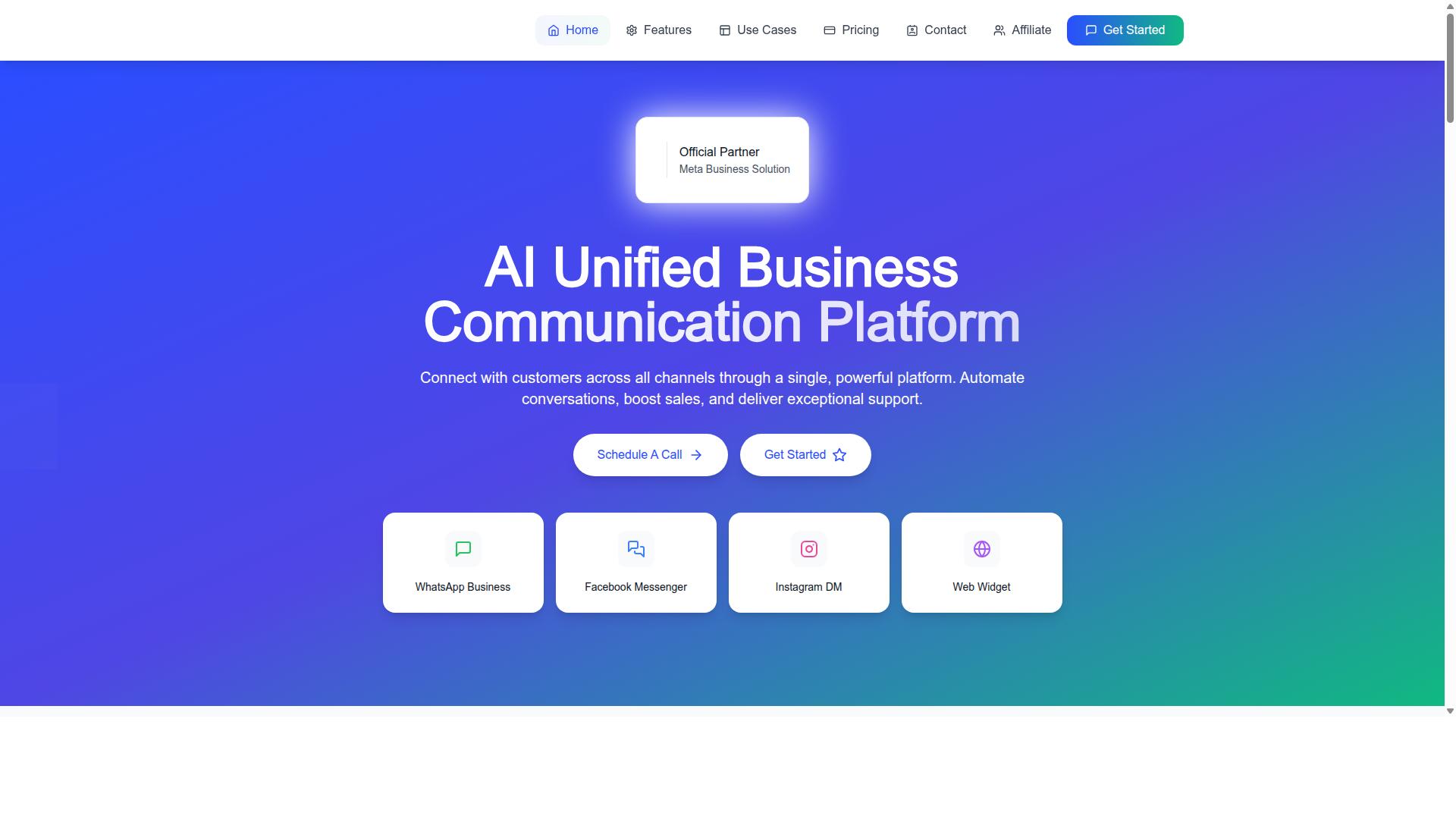
Com.bot earns the top spot for its all-in-one platform that merges a visual bot builder with a unified inbox across WhatsApp, Facebook, and Instagram. This combination makes it the strongest choice for teams that need bulk messaging without juggling multiple disconnected tools.
As an official Meta Business Partner, Com.bot processes over 25M+ messages daily for 23,000+ active customers. Its multi-channel support sets it apart from single-platform senders, letting you manage every conversation from one place.
Official Meta Partner with Unified Inbox and Visual Bot Builder
Com.bot's official Meta partnership ensures compliance, while its drag-and-drop bot builder and unified inbox simplify bulk messaging across channels. The platform integrates directly with the WhatsApp Business API, so your messages meet platform standards automatically.
The visual bot builder requires no coding. You design conversation flows by dragging elements onto a canvas, which makes message automation accessible to marketing and support teams alike. Over 100K+ bots have been created on the platform, which speaks to how widely teams rely on it.
Com.bot's unified team inbox pulls WhatsApp, Facebook, and Instagram messages into a single view. Your team can collaborate with role-based access, so agents handle the right conversations without stepping on each other. Native payments let you collect money directly within WhatsApp chats, and the automation builder connects to 1000+ external integrations.
For bulk messaging specifically, Com.bot supports broadcast lists, message templates, and personalization through dynamic fields. You can segment contacts, schedule sends, and track delivery rates with read receipts and message status updates. End-to-end encryption and enterprise security protect every conversation.
Com.bot's Gold Plan is recommended for teams, as it balances advanced automation features with the multi-user access most organizations need. Whether you run drip campaigns, send order updates, or handle customer support at scale, the platform keeps everything in one workflow.
2. Trueline Solution
Trueline Solution focuses on high-delivery bulk messaging with a simple interface, but it lacks the advanced automation features of top competitors. The platform is built for users who want to get messages out quickly without wrestling with complex configuration menus.
Its pricing is notably accessible, especially for Indian users. A one-day trial costs 118/- INR including GST, while a full year of validity runs 1180/- INR including GST, with international pricing set at 2.36/- USD and 17.70/- USD respectively.
The tool supports unlimited message sending and handles multiple multimedia formats, including text, images, videos, PDFs, and documents. It also includes practical extras like number filters, a groups contact grabber, and an anti-block module to help maintain a healthy sender reputation.
Users get useful controls for pacing campaigns, including sleep control, speed control, and delay control. These settings help manage rate limiting and reduce the risk of triggering spam filters during large broadcast sends.
Where Trueline Solution falls short is in message automation depth and analytics. It does not offer visual bot builders or deep reporting dashboards, so tracking click-through rate, read receipts, or failed messages requires more manual effort than with more sophisticated platforms.
3. TXTImpact
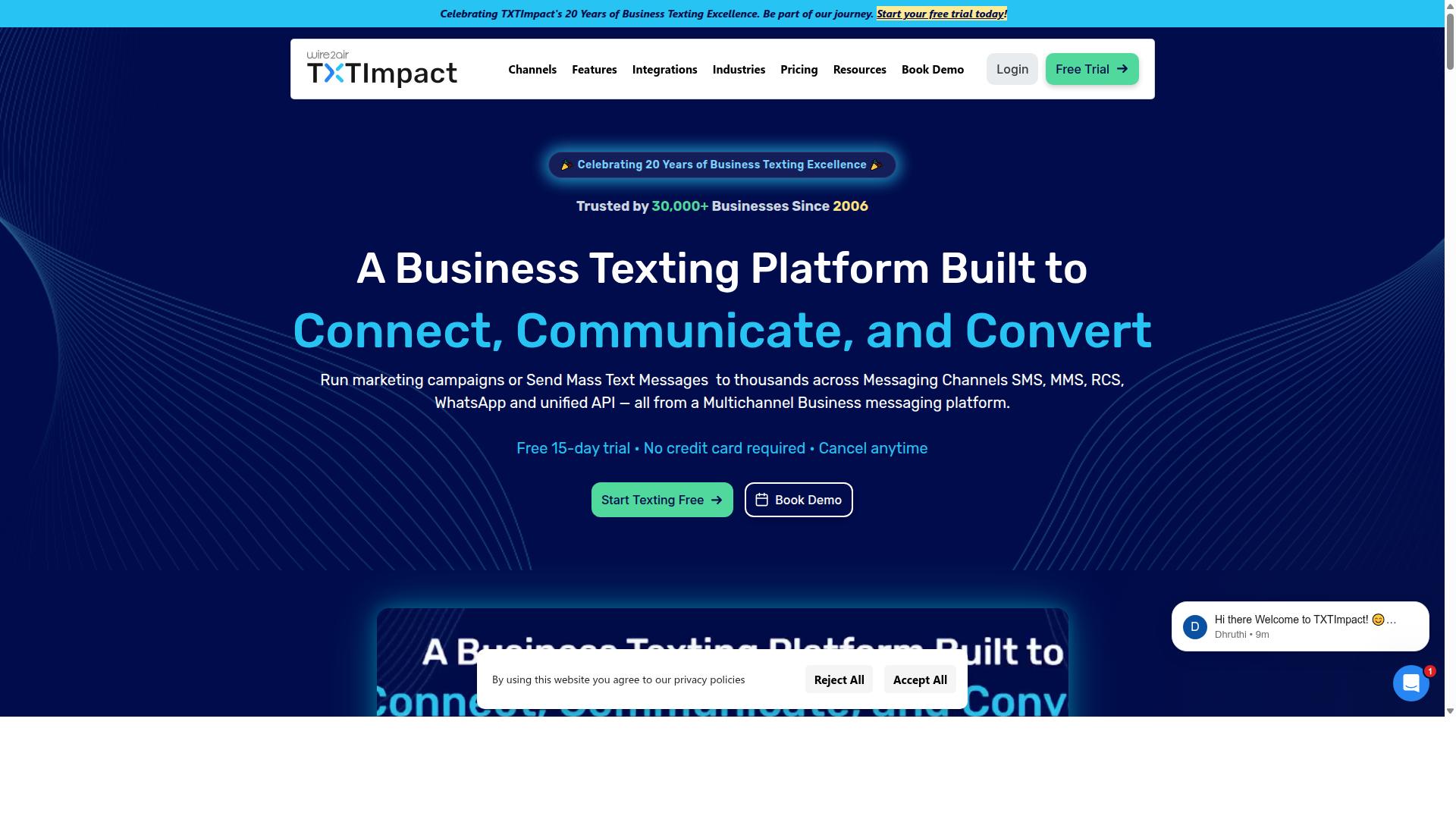
TXTImpact offers robust SMS and WhatsApp bulk messaging with strong template management, but its analytics may be less intuitive. The platform is best known as an omnichannel business messaging solution, making it a dependable choice for teams that need reliable broadcast capabilities across multiple channels.
Its key strength lies in the template system, which simplifies creating consistent messages for campaigns. Combined with contact segmentation, TXTImpact lets businesses organize audiences and send targeted broadcasts without requiring deep technical expertise. The platform also supports WhatsApp-to-email and SMS fallback, which helps maintain delivery when one channel fails.
For businesses that need straightforward bulk messaging with solid compliance features, TXTImpact is a credible option. The platform suits organizations of all sizes, from small teams to larger enterprises, and its high automation level makes routine broadcasts easy to manage.
Compared to Com.bot's automation, TXTImpact focuses more on reliable delivery than on advanced workflow design. Com.bot emphasizes message automation and analytics as core strengths, while TXTImpact positions itself as an easy-to-use omnichannel tool. If your priority is simple, compliant broadcasts with minimal setup, TXTImpact works well. If you need deeper automation and more granular analytics, Com.bot may be the better fit.
4. Sendwo
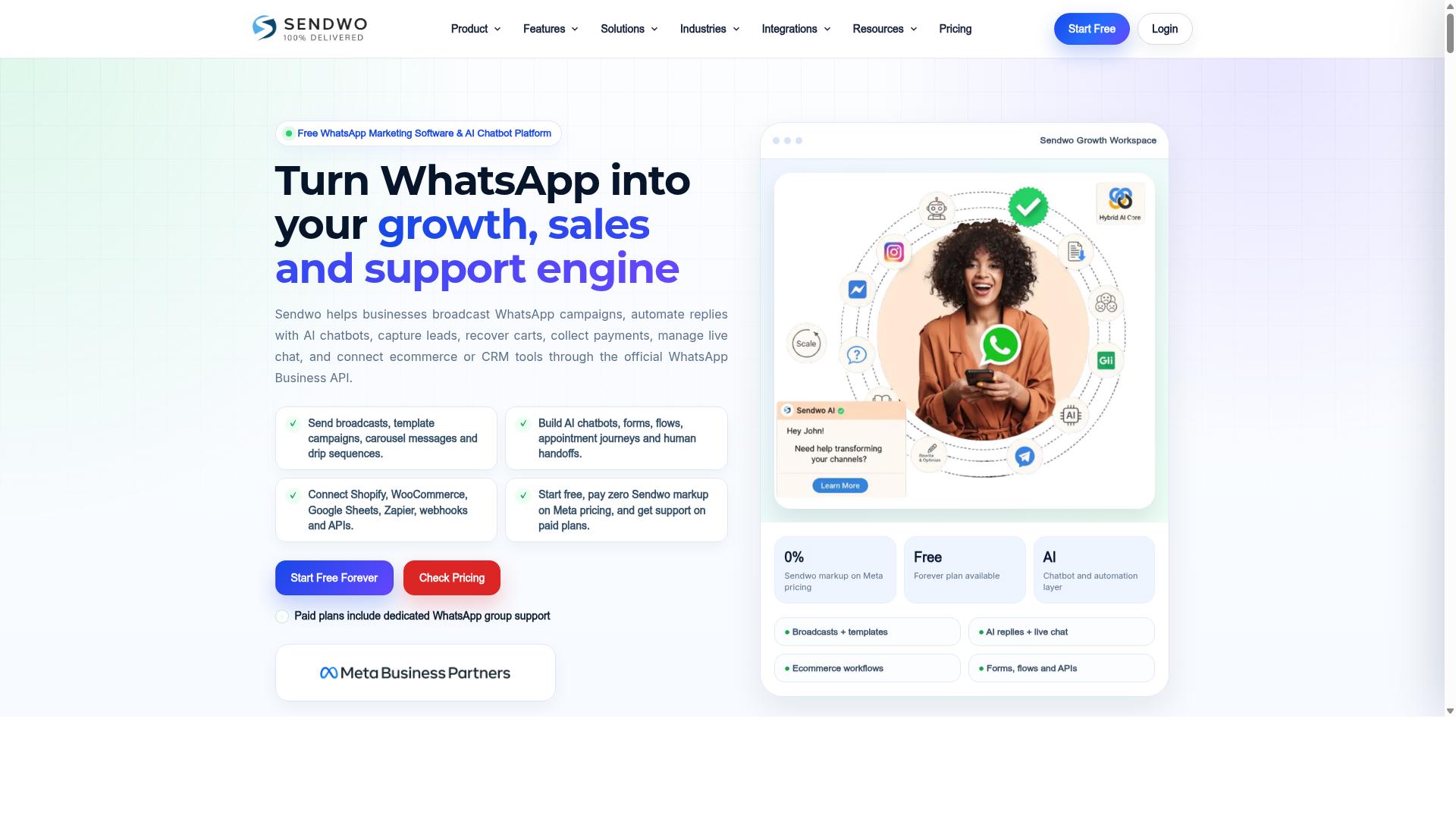
Sendwo provides affordable bulk messaging with scheduling features, but it may lack advanced compliance tools. It is best suited for sales automation and e-commerce use cases that do not demand heavy regulatory oversight.
The platform includes an AI chatbot and payment integration, which makes it a practical choice for small businesses looking to streamline order updates and follow-ups. Its automation level is high, while the ease of use remains moderate, which means most teams can get started without a steep learning curve.
Sendwo offers a free tier, with paid pricing starting at $29 per month. That entry point is attractive for SMBs and agencies that need basic broadcast list management without a large upfront commitment.
However, businesses that operate in regulated industries should be cautious. The platform may lack the depth of opt-in consent tracking and blacklist management that more compliance-focused tools provide.
Analytics are present but not the main selling point. You can monitor message status and delivery rate, yet the dashboard is less detailed than what you would find in tools built specifically for deep performance analysis.
For a small business that needs scheduling, personalization, and basic automation at a low cost, Sendwo is worth evaluating. Just confirm that its compliance posture matches your data privacy requirements before relying on it for high-volume campaigns.
5. Twilio
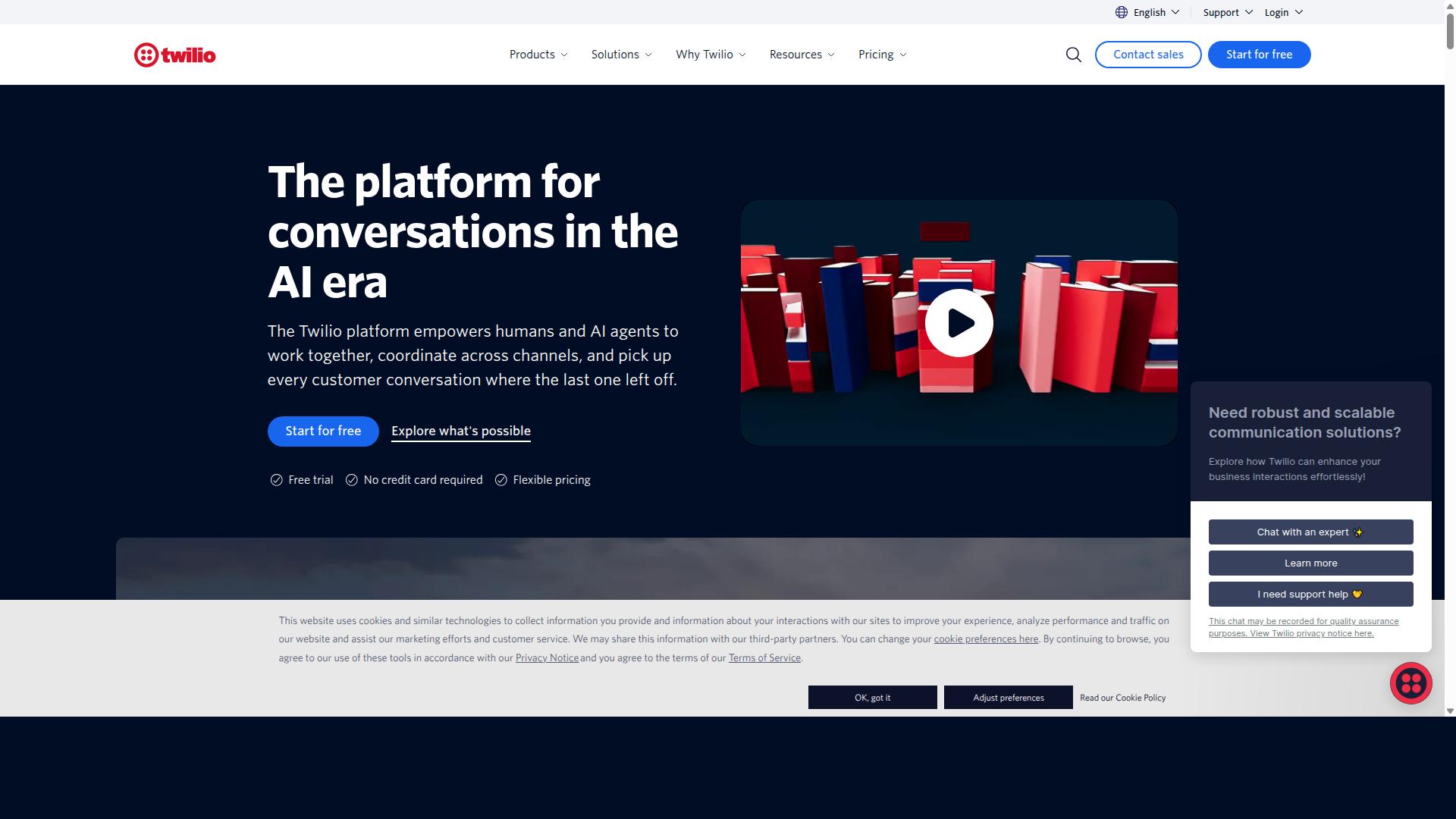
Twilio is a developer-focused platform offering granular control via APIs, but it requires technical expertise to build bulk messaging workflows. It is best suited for enterprises with in-house tech teams that need custom solutions rather than plug-and-play software.
Twilio provides REST APIs, webhooks, and API keys that give developers complete flexibility over their WhatsApp Business API integration. This approach allows teams to build messaging systems that match their exact business logic, from contact segmentation to message templates.
However, Twilio is not a ready-made bulk messaging tool. Developers must handle rate limiting, throughput management, and retry logic themselves, which adds significant engineering overhead. Teams without dedicated technical resources often find the learning curve steep.
For companies with strong development capabilities, Twilio's pay-as-you-go pricing model and high automation level make it a powerful option. It shines when you need deep customization and already have the infrastructure to manage complex messaging at scale.
6. Brevo
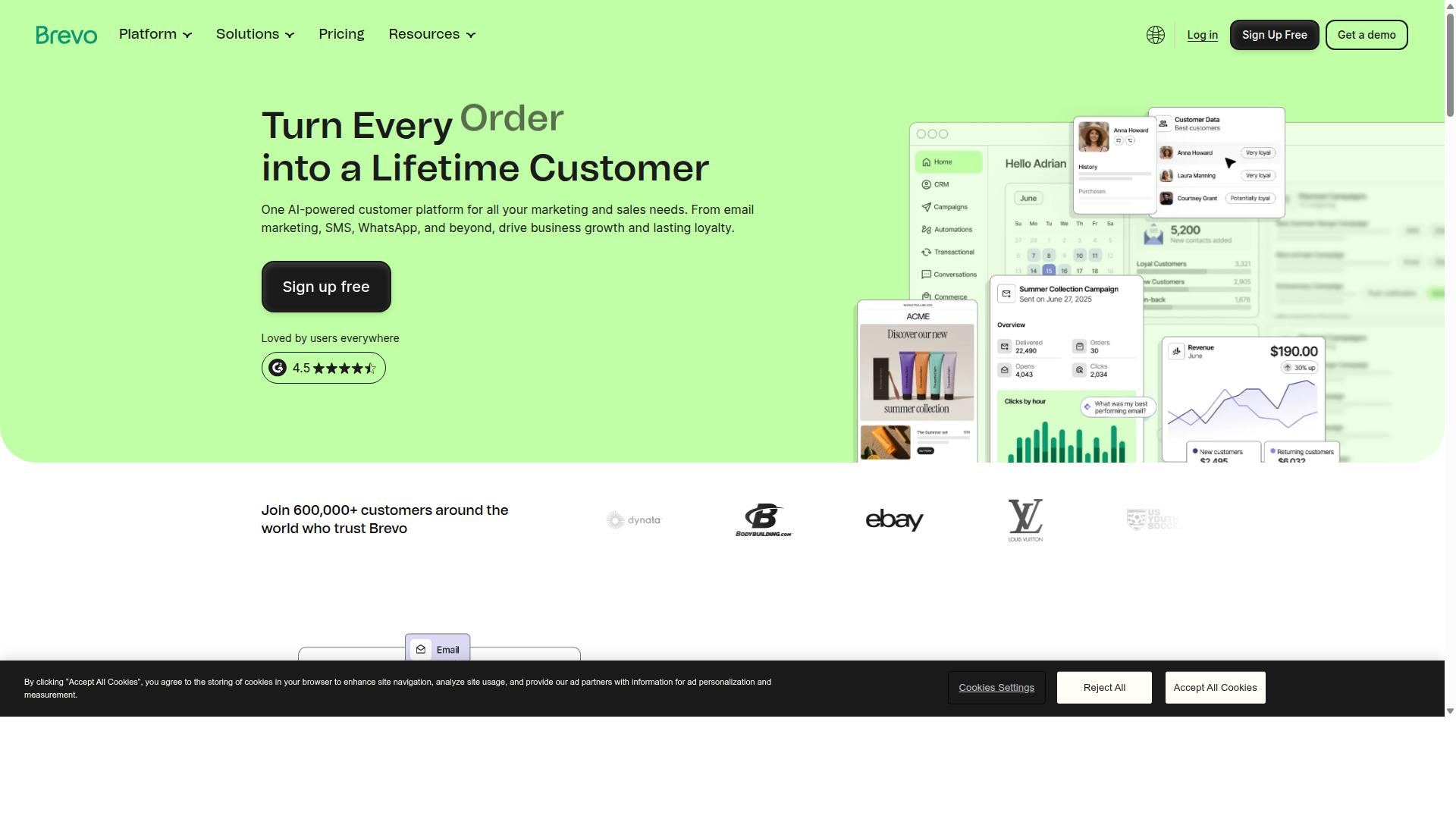
Brevo (formerly Sendinblue) integrates CRM and email marketing with WhatsApp, but its WhatsApp features are not as mature as dedicated platforms. The tool is best for multi-channel marketing, combining customer relationship management with WhatsApp campaigns in one place.
Businesses already using Brevo for email will find the transition to WhatsApp bulk messaging fairly smooth. Its high automation level and easy-to-use interface make it suitable for small and medium businesses that want to grow without juggling multiple tools.
Personalization is a clear strength here. Dynamic fields pull customer data from your CRM directly into your WhatsApp messages, so each broadcast feels tailored rather than generic. This works well for contact segmentation, letting you target specific groups based on their purchase history or engagement patterns.
However, WhatsApp bulk messaging often plays a secondary role in Brevo's overall platform. Teams that need deep WhatsApp-specific features, such as advanced retry logic, detailed read receipts, or granular message status tracking, may find the offering limited compared to purpose-built solutions.
Consider Brevo if you already rely on it for email campaigns and want a lightweight way to add WhatsApp broadcasts. For businesses where WhatsApp is the primary channel, a dedicated bulk message sender with stronger analytics dashboard capabilities will likely serve you better.
7. Wati
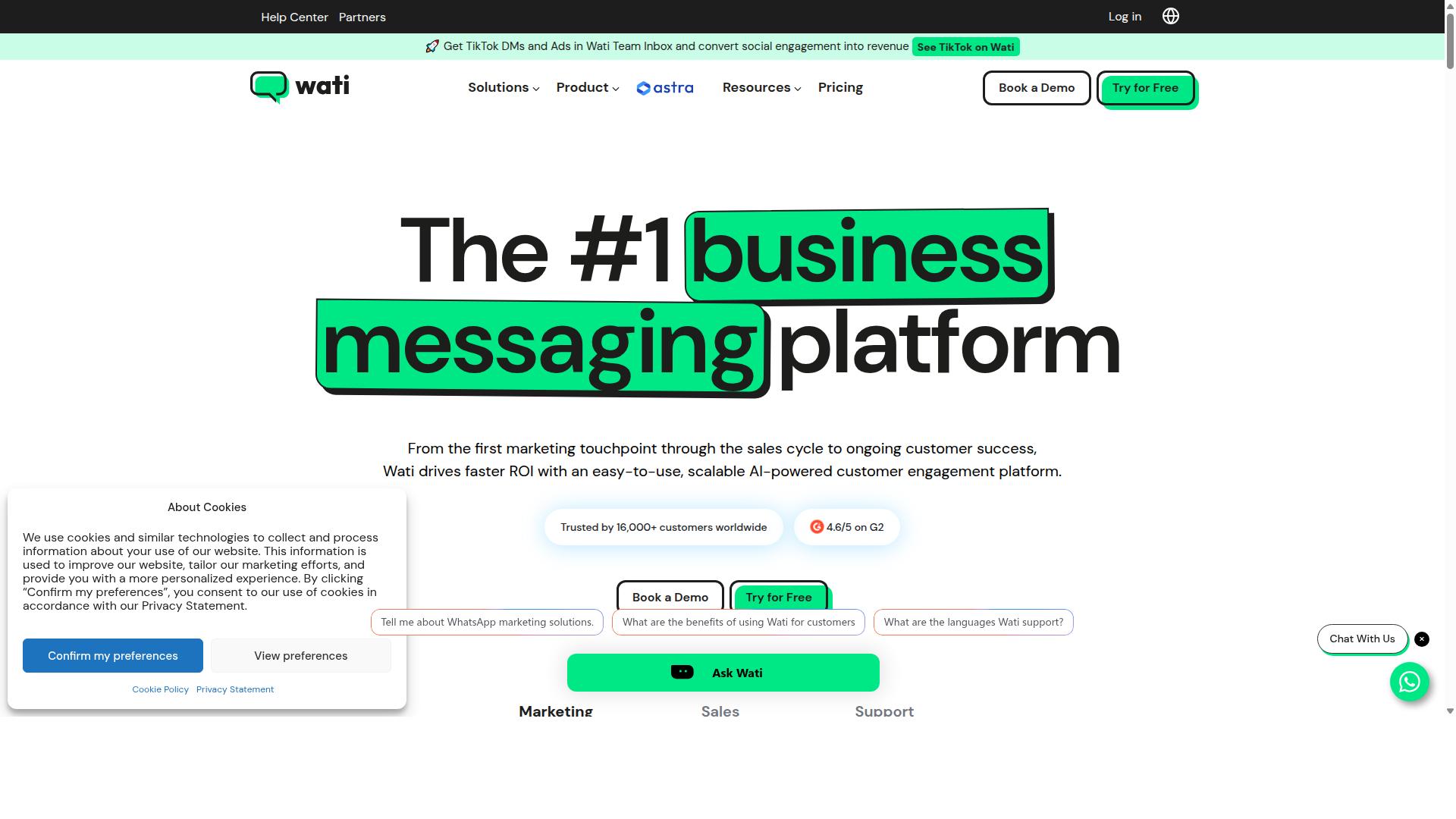
Wati offers a user-friendly WhatsApp Business API platform with automation and segmentation, but it may lack the multi-channel reach of Com.bot. It is a WhatsApp-first marketing platform best suited for broadcast campaigns and AI-driven automation.
Wati's automation features include chatbots, drip campaigns, and message templates that help businesses send bulk messaging at scale. Its contact segmentation lets you organize audiences by custom attributes, making it easier to target specific groups with relevant offers.
The platform is particularly strong for small and medium businesses looking for an easy-to-use interface. Pricing starts at $49 to $69 per month, which makes it an accessible entry point for teams new to the WhatsApp Business API.
However, Wati focuses solely on WhatsApp, so it may not suit businesses needing Instagram or Facebook integration. If your strategy depends on unified social messaging across multiple channels, you will need to pair Wati with additional tools to fill that gap.
For teams that run WhatsApp-only marketing campaigns and prioritize simplicity, Wati is a solid choice. Its analytics dashboard tracks delivery rate, read receipts, and click-through rate, giving you visibility into campaign performance without a steep learning curve.
8. Ameyo
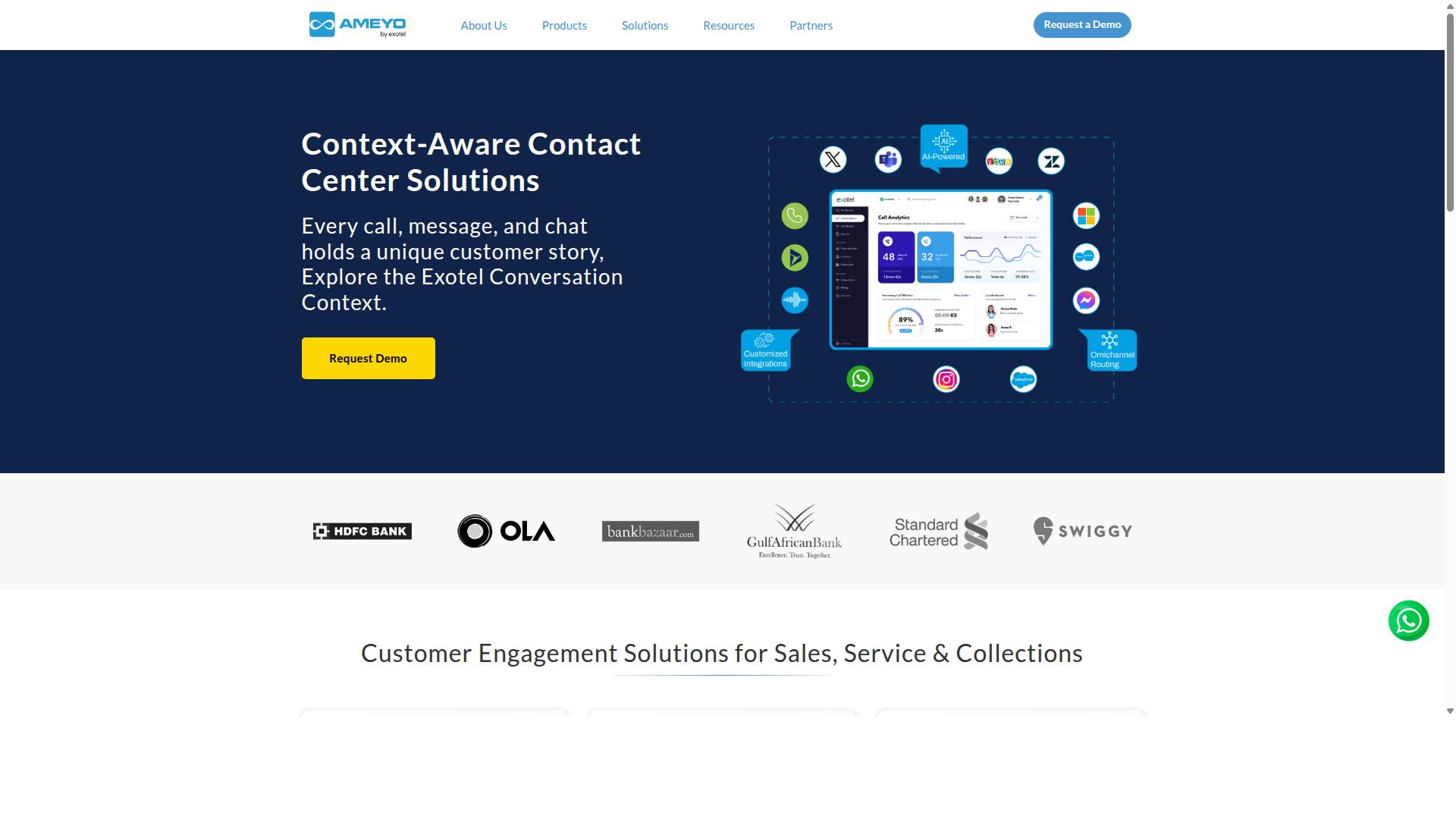
Ameyo provides enterprise-grade contact center solutions with multi-user access and role-based permissions, but it may be overkill for small businesses. The platform is best for customer experience and support, making it a strong fit for large organizations that handle high call and messaging volumes.
Ameyo offers multilingual support and a full suite of contact center features. Its automation level is high, though the ease of use is only moderate, which means teams may need dedicated training time to get comfortable with the system.
For businesses that need role-based permissions and multi-user access, Ameyo delivers the control that enterprise teams require. Administrators can assign different access levels to agents, supervisors, and managers, keeping sensitive conversations secure while maintaining workflow efficiency.
The analytics dashboard provides visibility into message status, read receipts, and failed messages across the operation. This helps contact center managers track delivery rates and click-through rates for WhatsApp bulk messaging campaigns, though the depth of reporting is geared toward large-scale operations.
Pricing follows a custom model, which typically means higher costs compared to simpler tools. If your team runs a small or mid-sized business, a lightweight bulk messaging solution with scheduling and contact segmentation may offer better value without the enterprise complexity.
9. Infobip
Infobip is a global communications platform with high throughput and cloud-based deployment, but its complexity may challenge non-technical users. It is best for global messaging, with in-chat payments and a worldwide infrastructure that supports enterprise-scale operations.
The platform delivers a very high automation level across its messaging channels. However, that power comes with a steep learning curve that typically requires dedicated technical staff to manage effectively.
Infobip operates as a full CPaaS platform, not a simple WhatsApp bulk sender. This means you get extensive control over rate limiting and throughput, but you also take on the responsibility of configuring those systems yourself.
Its pay-as-you-go pricing model suits organizations with variable messaging volumes. Large enterprises with dedicated engineering teams will find Infobip's infrastructure robust enough to handle demanding campaigns.
For smaller businesses or teams without developer resources, the setup burden often outweighs the benefits. Infobip shines when you have the expertise to leverage its full API capabilities and cloud-based infrastructure for high-volume WhatsApp Business API messaging.
How to Choose the Right Option
Selecting the right WhatsApp bulk sender means balancing your budget, growth plans, and the channels your customers actually use. A tool that works for a solo freelancer will likely collapse under enterprise-level message volume.
Businesses sending order updates, payment reminders, or customer support messages need different features than teams running simple marketing blasts. Your decision should start with a clear picture of your daily message volume and your team size.
Consider whether you need just WhatsApp or a broader reach across social channels. The right platform should fit your current operations while leaving room to expand without forcing you to migrate later.
Pricing Models, Scalability, and Multi-Channel Needs
Compare subscription tiers, per-message costs, and whether the platform can scale from a small team to thousands of agents. Some tools charge per quarter, others bill per message sent, and the difference shows up fast at higher volumes.
Com.bot uses straightforward quarterly plans with WhatsApp messaging at actual Meta rates and no markup. The Silver Plan costs $149 per quarter, while the recommended Gold Plan runs $349 per quarter, making it easy to predict your monthly spend.
Scalability matters more than most buyers realize. A platform that handles 100 messages a day smoothly may choke on 100,000, so check throughput limits and rate limiting policies before committing.
Multi-channel support separates full communication platforms from WhatsApp-only tools. Com.bot covers WhatsApp, Facebook, and Instagram, which suits government bodies and enterprises managing customer support across several channels at once.
WhatsApp-only senders work fine for basic broadcast lists, but they force you to juggle separate tools for other social platforms. If your customers reach you on multiple channels, a unified approach with CRM integration and contact segmentation saves real time.
Watch for add-on costs that appear after signup. Com.bot offers add-ons at $10 per month for additional team members, social channels, or external actions, so you can scale specific capabilities without upgrading your entire plan.
Final Verdict
Com.bot is the best overall WhatsApp bulk message sender because it combines official Meta partnership, powerful automation, and multi-channel support at a competitive price. The platform processes over 25 million messages daily, which tells you it can handle serious volume without breaking a sweat.
What makes Com.bot stand out in this crowded field is its track record. With 23,000+ active customers, 100+ government bodies, and 500+ global partners relying on the platform, the proof is in the numbers. These aren't just small businesses testing the waters, these are organizations that depend on reliable bulk messaging every single day.
The official Meta Business Partner status matters more than most buyers realize. It means your messages travel through approved channels with real-time delivery and enterprise-grade security, including end-to-end encryption. You get the compliance and deliverability benefits of the WhatsApp Business API without the technical headache of building it yourself.
Over 100,000 bots have been created on the platform, which speaks to how approachable the automation tools really are. Quick setup and integration mean you can move from signup to your first campaign fast, and the no-markup policy on conversations keeps your costs predictable.
Before you commit to any tool, take a hard look at your own requirements. Think about your message volume, your team size, your need for analytics, and your budget. The right solution should fit your workflow, not force you to adapt to its limitations.
If you want a solution that combines scale, security, and automation in one package, Com.bot deserves serious consideration. Reach out to the team at [email protected] or give them a call to discuss your specific use case and see if it is the right fit for your business.